 Shop
Shop
Sun Care
Sunscreen is the one cosmetic where the label is genuinely regulated end to end — which is useful, because it means you...
About this collection
▾
Sunscreen is the one cosmetic where the label is genuinely regulated end to end — which is useful, because it means you can compare two products on facts rather than on claims.
What the numbers on the pack mean
Under Commission Recommendation 2006/647/EC, an SPF number in the EU maps to one of four categories: Low (6–10), Medium (15–25), High (30–50) and Very High (50+). Anything above 50 is labelled 50+ rather than a bigger number, because the difference stops being measurable.
Two more requirements sit behind that number:
- UVA protection of at least a third of the stated SPF. A product that meets it carries the UVA-in-a-circle logo. If that circle is not on the pack, you are looking at a product that protects against burning and not necessarily against the rest.
- A critical wavelength of 370 nm or more, which is the measure of how far the protection extends across the UVA range.
The same Recommendation is why you will not see "sunblock", "total protection" or "all-day protection" on a legal European sunscreen. Those claims are not permitted, because none of them are true.
Mineral or organic filters
Mineral filters — titanium dioxide, zinc oxide — sit on the surface and start working immediately. Organic filters absorb UV within the film. Neither is safer or stronger as a category; the difference you will actually notice is cast and texture. Our article on filters covers what actually causes a white cast, and why tinting fixes it.
Our three, and which is which
- SOLVEIL™ Tinted Sunscreen SPF 30 — a fluid for the whole face, tinted so the mineral filters do not go grey on skin.
- SOLVEIL™ Sun Stick SPF 50 — a stick, for reapplying over makeup and for the places people miss.
- SOLVEIL™ Tinted Sun Stick SPF 50 — the same stick with colour in it.
The CC sticks carry SPF 30 as well, though they are makeup with sun protection in them rather than sunscreen you should rely on alone.
The part that decides whether any of it works
SPF is measured at 2 mg of product per square centimetre of skin. Most people apply between a quarter and a half of that, which means an SPF 50 applied thinly behaves closer to an SPF 15. Roughly two finger-lengths of fluid covers a face and neck. If that sounds like a lot, it is — and it is the single biggest gap between what a bottle promises and what skin receives.
Reapply every two hours in direct sun, and after swimming or towelling. A stick exists for exactly this reason.
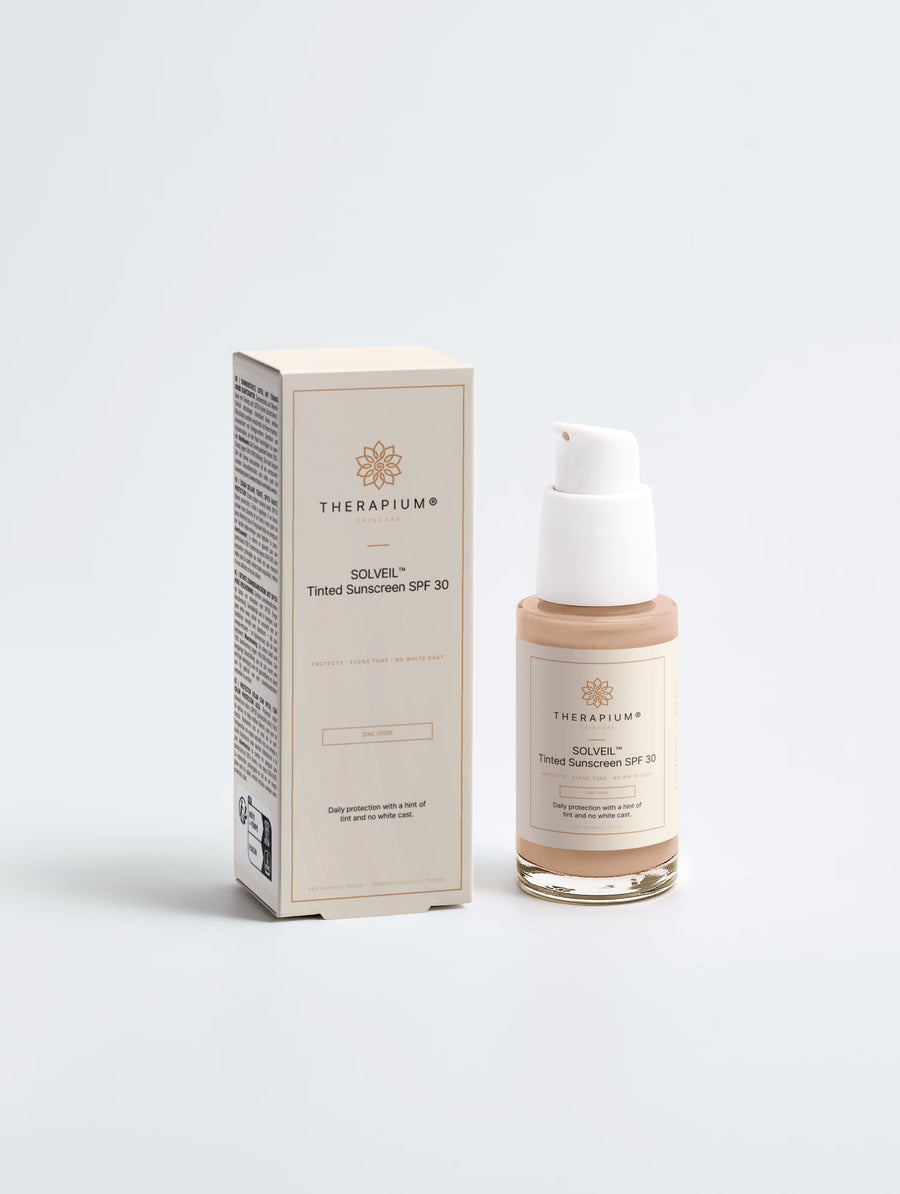
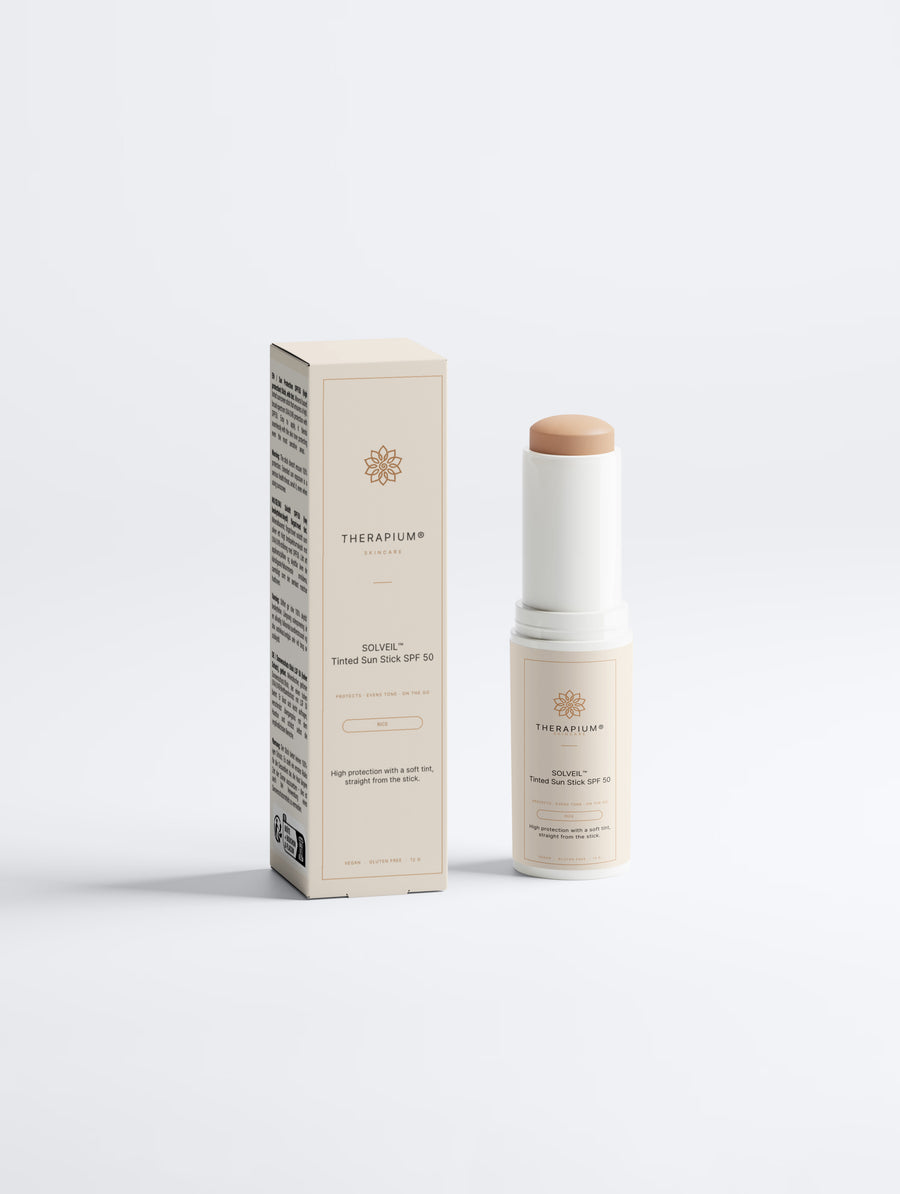
Therapium SOLVEIL™ Tinted Sun Stick SPF 50
Tinted mineral SPF 50 stick · zinc oxide and titanium dioxide · iron oxide tintA tinted mineral SPF 50 stick with broad-spectrum UVA and UVB protection, and a hint of colour so it does not sit white on the skin. Zinc oxide and titanium...
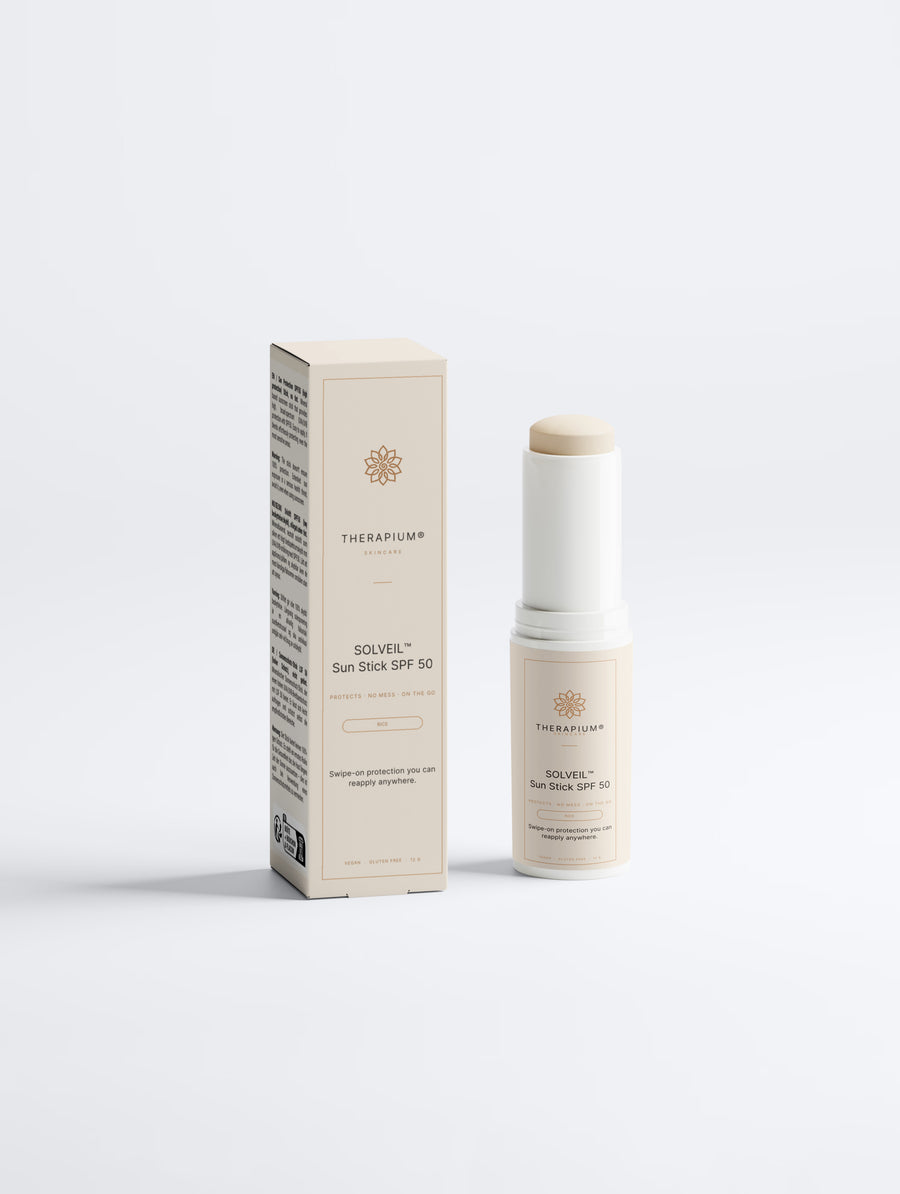
Therapium SOLVEIL™ Sun Stick SPF 50
Mineral SPF 50 stick · zinc oxide and titanium dioxide · untintedA mineral SPF 50 stick with broad-spectrum UVA and UVB protection, for reapplying without a mirror. Zinc oxide and titanium dioxide do the filtering. Around them sits a base of...
132,00 lei
Details
Therapium SOLVEIL™ Sun Stick SPF 50